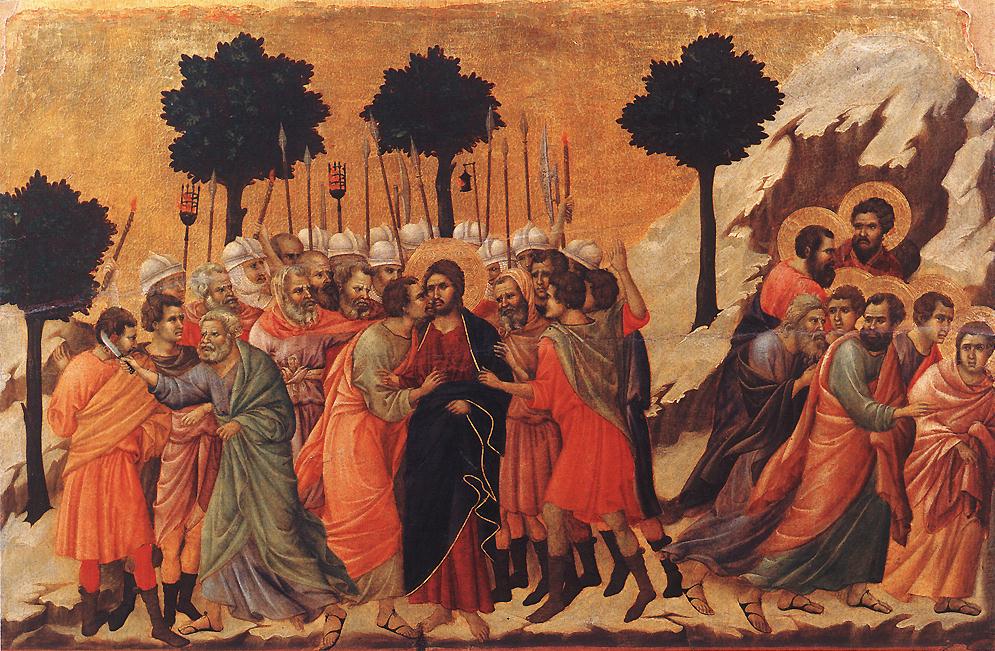
Picture the scene in the Garden of Gethsemane. The air is thick with tension and betrayal as armed guards arrive to arrest Jesus. In a moment of panic and fierce loyalty, the Apostle Peter draws a weapon. As the Gospel records:
"Then Simon Peter, having a sword, drew it and struck the high priest's servant and cut off his right ear. (The servant's name was Malchus.)" (John 18:10 ESV)
Most of us read this passage and assume Peter took a wild, terrified swing in the dark and missed. But looking at the cultural and religious context of the time reveals a much darker human intention and a much brighter picture of Jesus' mercy.
To understand what really happened in the garden, we have to look back to the Old Testament. God outlined strict physical requirements for anyone serving in the temple:
"For no one who has a blemish shall draw near, a man blind or lame, or one who has a mutilated face or a limb too long," (Leviticus 21:18 ESV)
Furthermore, the ritual for consecrating a priest required a very specific act with sacrificial blood.
"And he killed it, and Moses took some of its blood and put it on the lobe of Aaron's right ear and on the thumb of his right hand and on the big toe of his right foot." (Leviticus 8:23 ESV)
Without a right ear, a man was permanently disqualified from temple service. If untreated, Malchus would have lost his livelihood, his social standing, and his ability to fully participate in the religious life of his community.
Peter was not just lashing out physically. He was using the Law as a weapon to permanently strip Malchus of his identity and his access to God.
Is this something we as Christians struggle with?
When we feel threatened, don't our instincts point to defend ourselves? We wish to dismantle our enemies because of our own sense of self-righteousness. We want to disqualify them and cut them off from the community, the tribe, the care group, or the church. Peter loved Jesus deeply, but he fundamentally misunderstood His mission. He believed the kingdom of God had to be defended with violence and exclusion.
Even today, believers face the temptation to fight spiritual battles with worldly anger. We look at those who oppose us and want to strike them down, forgetting the clear warning of Scripture:
"for the anger of man does not produce the righteousness of God." (James 1:20 ESV)
How did Jesus respond to Peter?
Jesus' response to Peter serves as a piercing rebuke to this kind of aggressive religion. He immediately halts the violence:
"But Jesus said, 'No more of this!' And he touched his ear and healed him." (Luke 22:51 ESV)
Jesus does not just stop the bleeding. He performs a miracle that completely subverts Peter's weaponized use of the law. He restores the man's physical body, his livelihood, and his right to enter the temple. And He does this for an enemy who is actively participating in His unjust arrest. He extends grace to someone who is currently in the middle of ruining His life.
What therefore is the message of Jesus?
The healing of Malchus is not just a dramatic conclusion to the arrest. It is a profound summary of the Gospel message. Reconciliation with God does not come through the strict, exclusionary enforcement of the law. If it did, Peter would have been right to strike Malchus. Instead, reconciliation comes entirely through unmerited grace.
"For if while we were enemies we were reconciled to God by the death of his Son, much more, now that we are reconciled, shall we be saved by his life." (Romans 5:10 ESV)
Grace is not just about the forgiveness we receive. It is about the reconciliation we are called to extend. It requires putting down the sword, stepping past our defensive instincts, and trusting that God's kingdom is built not by cutting people off, but by making them whole.
Comments
Post a Comment